Sunday, April 23, 2017

Goodbye

I was a determined student
Hardworking, with a 5 year plan--at least
I knew what it was that I wanted
Strong willed and stubborn
College and life--all figured out
I’ve known since I was 8 what I’ve wanted to do
It was a couple weeks ago when I became lost
With news of college rejection letters my plans had to change
5+ years in the making, I’ve only had one school I truly wished to attend
But it seems as though it wasn’t my time
Full of anger and confusion-- I wanted nothing to do with the school
Until I had an epiphany
I decided that if it were the last thing I do, I’d go to that university
I was sad and lost-- while everyone knows where they’re going
However, still lost, I’m no longer sad, I look towards the future
I imagine myself years from now, being grateful that I was rejected at first
And fulfilled to be attending the school of my dreams
A 5 year plan is currently being drawn up
I suppose I prepared a backup plan just in case this happened
It was heart-breaking to find out
I was adrift in a sea full of floaters
My years of work, dedication and aspiration are not in vain
For years from now when I look back, I will appreciate my being lost
I will appreciate my circumstances and its spontaneity  

What I was will not transcend into who I will be

Saturday, March 18, 2017

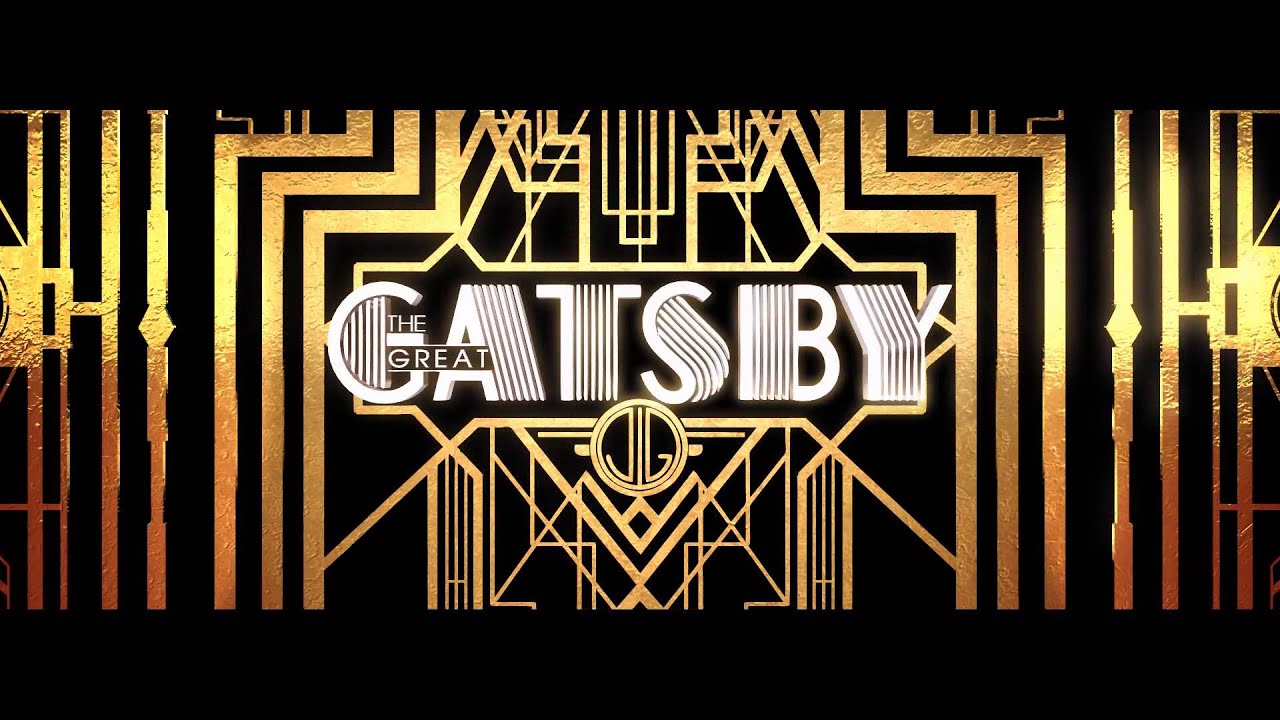
The American Dream


Related image

***Slight Spoilers if you haven’t finished the book***

I would describe the “American Dream” as a goal people have or new possibilities. The “American Dream”would solidify that someone has reached a sense of achievement. It is something to strive for for both the people living outside of the United States and those living in, ironically enough. It is the aspirations and desires that people wish to accomplish that they couldn’t have if the circumstances were different. For example in the book, Gatsby’s “American Dream” is to have Daisy, solidify their love, and maintain the lavish life that Daisy wants. Gatsby couldn’t have done that years ago, living as James Gatz in rural North Dakota. In order to reach his “American Dream”, he had to change. With the "American Dream" however, people are likely to get greedy. They get a "taste" of what could be and get blind sided by reality-- like Gatsby falling in love with a woman who's married, with her own family, and who has such high standards for her lifestyle, or Nick Carraway falling into a lifestyle that he could never afford because he's excited about the possibilities, and compromising his own character for the sake of that lifestyle. Greed caused by the "American Dream" is a recurring theme in the book and is demonstrated by every character.

Initially, when I hear wealth, I think of it in the monetary sense. However, one can have wealth in a plethora of things--knowledge, life, etc. One can be wealthy in life and be incredibly fortunate, and one can have wealth of knowledge and use that knowledge to do good things. Overall, my definition of wealth is an abundance of something that can have an impact whether positive or negative.  

I think that Americans value wealth as much today, or even more, than when they did in the 1920s. Today’s society is still materialistic and with wealth comes more advancements, more objects for families or individuals, and overall, I think wealth is preferred and what people strive for when they go to college. Today, they go not to get a well rounded- education, but to study a major that will give them a good job and a strong starting salary. I don’t believe that a large amount of American’s actually consider poverty too much. It isn’t something that directly affects them, and so not everyone thinks about it or tries to find ways to decrease poverty rates. When we hear about things that are going around in third world countries, we know that it’s sad and unfortunate, but we don’t do anything to stop it.

Personally, I did consider salary when I decided what my major would be. To be completely honest, I enjoy the more expensive lifestyle and more expensive things. I enjoy shopping, spending money, etc. and I’m very materialistic-- like all of the characters in The Great Gatsby. I have to have to be able to have a good career in order to maintain the lifestyle I wish to have. Therefore, my attitude toward wealth is that it can be good, depending on what you do with it, but too much wealth can be dangerous in the wrong hands. With poverty, I too am like a lot of Americans who understand the severity of poverty but don’t take much action. When I do receive a stable income, I not only want to spend it on the things I like, but to help those who need it more than I do.

Citations:
https://i.ytimg.com/vi/H8DPFPQambg/maxresdefault.jpg

Saturday, March 4, 2017

The Importance of Translation

#1:As Gregor Samsa awoke one morning from uneasy dreams he found himself transformed in his bed into a gigantic insect.

Syntax:
  • Adjectives to add to the sentence structure
  • No pauses in the sentence
    • The lack of commas or breaks in the sentence could cause grammatical confusion
    • Direct
Imagery/Details:
  • “Uneasy dreams” → perhaps a nightmare
  • “Gigantic insect” → negative, gross, nasty connotations
Structure:
  • The sentence begins with “as”, which sort of eases the readers into beginning the novel
Any other stylistic/figurative elements:
  • Diction: “transformed” → sounds scientific-y and sudden
  • Setting: “in his bed” → the sudden transformation occurred in the comfort in his own home→ why?


#2:Gregory Samsa woke from uneasy dreams one morning to find himself changed into a giant bug.

Syntax:
  • Short, choppy
  • Not much detail
  • Straight-forward
Imagery/Details:
  • Very little imagery or detail
Structure:
  • Gregory, instead of Gregor, like the other translations
  • Jumps straight into what occurred→ very blunt
  • Very absurdist→ this sentence doesn’t seem hopeful like Camus argued
Any other stylistic/figurative elements:
  • Diction: “changed” sounds like something simple, easy, like there’s not much to it

#3:When Gregor Samsa awoke from troubled dreams one morning he found he had been transformed in his bed into an enormous bug.

Syntax:
  • Regular length sentence, detailed
  • More adjectives
Imagery/Details:
  • A bit more detail than the other translations
  • More description of the morning
  • “Troubled dreams” → suggests that there is an internal problem he must deal with because he’s having bad dreams
Structure:
  • “When” sort of sounds like the incident occurred a while ago
  • “He found” → sounds as though he’s accountable for his transformation into a bug, placing a blame
Any other stylistic/figurative elements:
  • Diction: “enormous bug”--> different from the first translation which says “gigantic insect”
    • “Bug is general and open-ended”


#4:One morning, upon awakening from agitated dreams, Gregor Samsa found himself, in his bed, transformed into a monstrous vermin.

Syntax:
  • Very long
  • Lots of commas
  • A lot of description
  • A bit choppy/over the place
    • Not one concise sentence but a sentence that sounds as if it could be “spoken”
Imagery/Details:
  • The words “monstrous vermin” provide an image of a large and disgusting bug
Structure:
  • The other 3 translations begin with Gregor/y Samsa versus this one that describes the morning
  • “Upon awakening” suggests a kind of peacefulness until it follows with “agitated dreams” → provides contrast
Any other stylistic/figurative elements:
  • Diction: “agitated dreams” → Gregor is dealing with severe problems to have dreams that manifest in an agitated state→ frustrated and anxious connotation


Awoke vs. woke vs. awakening
  • All part of the past tense
  • Awoke sounds “proper”
  • Woke is more casual→ “he woke up”
  • Awakening sounds like a major revelation; something very serious

Translated texts are always harder to read because we as the readers must rely on the translator to accurately describe the events in the novel. It is also challenging because meaning is lost in translated novels. There are some sayings or phrases in other languages that don’t have literal translations, so reading a translated book isn’t always what the author intended to describe. As seen with the 4 translations punctuation and literary devices can alter the meaning of the sentence. The first translation lacks any punctuation which makes the sentence choppy and bit hard to understand whereas the fourth translation has too much punctuation, in my opinion, for something that could be said in a more constructed way. The tones are also different with each translation. Translation #1’s tone is informative and direct. Translation #2’s tone is short and simple. Translation #3’s tone is descriptive and is in the same structure that I would typically read. Lastly, Translation #4’s tone is “open”-- as though the translator wanted to give the reader specific descriptions on what happened that morning. Although all of the sentences are objective and informative, some sentences seem like they’re just written as fact, whereas others are flowing and story-like.

The word choice, as well as the other literary devices used, reflect the translator and how they chose to portray the original idea the author tried to create. The sentences with more detail and imagery suggest that the translator thought the the author would like something more descriptive and interesting to read. However, I do believe that the translators try to put their own spin on things in order to add their style to the novel, so whether or not the description was for the author or the translator himself, it is still reflective on the translator’s writing personality. The syntax in the translations change, and the longer, detailed sentences make the meaning of the work less “absurd” and more story like. The blatant sentences with less description are more absurd because, similar to Camus’ The Stranger, there is no sense of hope in the sentences. It is direct and almost like the narrator is listing a series of events that occurred.

For the purpose of portraying the idea of the absurd, I think that Translation #2 is the most effective. It has the least amount of description, there are no punctuation, the imagery and diction is minimal. Although only knowing the first sentence and not knowing whether or not Gregor Samsa is searching for meaning, this translation shows that there is no meaning in the world and lack of purpose, which is the foundation of absurdism. This translator did the best to prove to Camus that the story displays absurdism, contrary to what Camus argues. The difficulty of reading translated texts is that we never know the author’s true intentions for the story or the literary devices he/she tried to use which in turn, ultimately alter the story’s meaning.  

Sunday, February 19, 2017

Practice IOC

IOC Practice- Sent through email


Criterion A: 5-6
It's clear that I've read the book, but I only focus on the excerpt at hand instead of bringing in knowledge from previous chapters. Next time, I should incorporate other themes/ideas from other chapters.

Criterion B: 5-6
I used a varied amount of literary devices and I discuss the affect it has on the reader/audience, however, when I discuss the affect it has, I use similar reasons for each literary device brought up. I should spend more time during the planning phase to really establish how the excerpt and/or literary device affects the reader.

Criterion C: 3
I have organized my writing and thoughts on the paper during the planning phase, however, when I begin to speak, it's clear that there is some organization, but my thoughts get jumbled up and I forget the point I was about to make. (I also say "um" a lot, or "uh") To improve this, I should spend more time practicing with the speaking or writing out step by step directions on what I'm going to discuss first (although this will cut in to my planning time)

Criterion D: 4
The language is clear and there is accuracy in grammar, however, in my head I try to say one thing, and when it comes out, it sounds different. Therefore, my sentence construction isn't as strong as it could be. To fix this I could take deep breaths and calm down, in order for my thoughts and ideas to come across eloquently.

Saturday, February 4, 2017

Never Let Me Go


The 4 covers of Kazuo Ishiguro’s are different through the messages or the impressions they leave to those looking at the cover. The concepts are very vague and left open to interpretation. The upper left hand corner (the one with the blonde girl) and the upper right hand corner (the yellow background and the girl turned away) focus on individuals, which could be presumed to be Kathy H. (the protagonist),and the illustrators have similar interpretations of Kathy. The girls are shying away from the camera/focal point, suggesting that Kathy is insecure. However, where one illustrator thinks Kathy is blonde, the other sees her as a brunette. The bottom two covers focus on objects rather than people, hinting that the novel may be about something bigger, with lots of serious thematic elements incorporated. None of them really reveal much about what the book is about and all of the covers have a depressing/lonely/isolated tone.

Looking closer at the cover with the faded girl in blue, a few words that come to mind are lost, hidden, hazy, and self-conscious. However, questions are raised whether or not the girl is Kathy H. or Ruth. We see that Kathy can be timid, really tries to make Ruth happy, and is unsure and curious about the world past Hailsham, however, Ruth too can be insecure. Ruth puts up a strong facade but we see in the novel that she can be caught off guard and she is sometimes not confident. If I hadn’t read the novel, I would think that the book is about a young, scared girl.

When looking at the gray cover with the organs, the first things I think of is that not all of the organs are shown. I don’t see the pancreas, or the large intestine, or a head even--the anatomical diagram is incomplete. I think this is done to allude to what the book is talking about-- clones that have to prove that they’re just like humans, that they have the same makeup and that we’re equal in terms of the anatomical makeup and the feelings. I think that people with minds that are fascinated with human life/science would pick up this book-- or people who are just really curious, because the cover is so peculiar.

When looking at both of the covers, I question why the cover with the hidden girl has the words “The Top Ten Bestseller” on the bottom, whereas the one with organs doesn’t. This may be because the illustrator wanted to give readers a reason as to why they should read the book. The cover with the organs, however, may not need it because, alone, it is more intriguing and different than having a girl on the cover (something that is very common). The illustrator of this cover didn’t need words to give people a reason to read it, that’s what the cover/drawing is for. This is seen again when the cover with the girl has testimonials on it. The cover isn’t strong enough to stand alone in comparison to the darker, compelling organ cover. Another thing that I think about for the organ cover is why certain letters are in white when spelling Kazuo Ishiguro’s name. Only the letters A, O, I, and G are in white. It’s unclear, to me at least, why those letters have significance and how they might connect to the book, but the letters don’t spell Hailsham, or Ruth, or Tommy, or Kathy H, or anything else I can think of. I may be reading too much into it and the illustrator may have done this to provide something “light” on the dark, black and gray cover. Both of the covers have the title “Never Let Me Go” in large font that is pretty centered and obvious. However, the upper right hand cover has Kazuo Ishiguro’s name in larger font than the title. This could be attributed to readers being more familiar with other novels from Ishiguro, and the illustrator may want people to read the book for its author, whereas Ishiguro’s name is small and on the bottom on the organ cover. This illustrator wants the idea of “Never let[ting] [.. go]” to be what entices the reader. Where one cover is more “in your face” and “look at the ratings this book got”, the other is much more subtle and simpler, allowing the reader to decide their own opinion of the book.

Saturday, January 21, 2017

4 larger-than-life lessons from soap operas

Kate Adams argues that Soap Operas teach us a lot, whether or not we realize it and she defends that they are applicable to our lives, however, they reflect our lives in a much more exaggerated way. The talk starts with her describing a soap opera and then using pathos of her in the second grade to show the importance of soaps to her. Throughout the talk, she goes through 4 life lessons and provides examples from the soap opera and then ties it to how that mirrors our lives. The 4 lessons are as follows:

Lesson #1: “Surrender is not an option”
Lesson #2: Sacrifice your ego and drop your superiority complex”
Lesson #3: “Evolution is real”
Lesson #4: “Resurrection is possible”

For Lesson #1 she gave an example of a character from “All My Children”, Erica Kane, who almost met her Image result for soap operasdeath facing a grizzly bear. She told the bear that he couldn’t harm her because she was “Erica Kane”. Kate Adams ties it back into real life by saying that we can either surrender when faced with an obstacle, or we can fight.

For Lesson #2 she discusses Howard Schultz, The CEO of Starbucks. He stepped down, and when he came back in 2008, the first thing he did was apologize to his employees and he asked them for new ideas to improve the business. Since he’s been back, Starbucks has more than double its revenue.

For Lesson #3 she says that recasting occurs often in soap operas and the story adapts for the person playing the character and in regards to our own lives, we too evolve. We can stay in one closed spot, or open ourselves to new possibilities/opportunities. We sometimes decide to evolve and adapt, but sometimes life chooses for us.

For Lesson #4 she says that as long as we’re still breathing, nothing is permanent. Which she then supports with pathos of when the show she worked on got cancelled and how she had to bring her life “back up” so to speak.

A good phrase to summarize the TedTalk, which Kate Adams used as her closing statement, is, “As long as there is breath in your body, it’s never too late to change your story”


I chose this TedTalk because a lot of people think that Soap Operas are a waste of time, that the acting is bad, or the story lines are too outlandish, but no one really takes them seriously. Kate Adams describes how the lessons that the soap operas teach are applicable to our lives. She made me look from a different perspective to realize that soap operas have life lessons and they are of value to the viewers. It reminds me of when we discussed the idea of human tendencies and good vs. evil in every piece that we’ve read thus far. For example, Lady Macbeth deciding that “surrendering is not an option”. They have come this far in their lives and they are destined to be the King and Queen of Cawdor. Or “evolution is real” in the case of Dr. Jekyll and Mr. Hyde. When Dr. Jekyll is present, he has a different set of opportunities than Hyde, mainly because of his social class and how he presents himself, whereas Hyde has a lack of opportunities because of his grotesque and indescribable appearance.


Kate Adams’ purpose is to get the audience to see the worth in soap operas. Yes, they are dramatic, theatrical, and sometimes, as she put it, “unsophisticated”, but she doesn’t want us, as the viewers, to discredit their value because of these reasons. She’s hoping that people become more open to viewing soap operas, and that they consider the parallel between the soap opera story lines and the person’s life.


Kate Adams was the assistant casting director on “As the World Turns” for 8 years. She watched soap operas, read the scripts, and auditioned actors to be on the soap opera. As she put it “[she] knows [her] stuff”.  Because of her experience in the Soap Opera industry, as well as her love for soap operas since the second grade, she does have credibility in what she’s saying because she knows soap operas and the depth of their plots.


Logos was present because Kate Adams had soap opera examples for each real life lesson. The quality of the examples were good but they were a little surface level. She explained the plot that corresponded to the lesson, however, she didn’t dig deeper or provide examples to which everyday people might encounter similar things. She tied her examples to people like the CEO of Starbucks but it’s clear that not everyone leads a similar life. There was definitely bias present because of her close relationship and extensive knowledge of soap operas. Her close ties may have persuaded her to discuss serious lessons that applied to normal everyday lives, but may not have necessarily applied to the soap opera to the extent in which she’s making it out to seem; especially with the title “4 larger-than-life lessons from soap operas”.

There are several examples of pathos in the TedTalk. For example, when she shows her great appreciation of soaps by saying that she ran home from the bus stop to watch Luke and Laura’s wedding on “General Related imageHospital”. This strategy was effective because we can relate to a time of being so excited for something that we ran all the way home or something to that effect of showing our emotions. Another example of pathos is when she describes how she lost her job and had to move from New York to Alabama with her in-laws. The audience can most certainly relate to a time when things were rough in their lives and when things seemed like they would never improve, which makes this yet another effective strategy for the argument presented. To finish off the example of pathos, she says that she was able to find a job, and things got better. Which shows the audience that things can improve while also demonstrating an example of one of the life lessons discussed-- “resurrection is possible”.


TedTalk:
https://www.ted.com/talks/kate_adams_4_larger_than_life_lessons_from_soap_operas/transcript?language=en#t-734400


Images:
https://www.google.com/url?sa=i&rct=j&q=&esrc=s&source=images&cd=&cad=rja&uact=8&ved=0ahUKEwjY5rj_19PRAhUDYiYKHSKrC1EQjRwIBw&url=https%3A%2F%2Fwww.pinterest.com%2Fpin%2F26036504068973804%2F&bvm=bv.144224172,d.eWE&psig=AFQjCNHo8V4IwfywxVSTPbovrgFZ8GuiTA&ust=1485103535030475

https://www.google.com/url?sa=i&rct=j&q=&esrc=s&source=images&cd=&cad=rja&uact=8&ved=0ahUKEwi4u-6r2NPRAhWKZiYKHWdGD1UQjRwIBw&url=https%3A%2F%2Fmichelleleighwrites.wordpress.com%2Ftag%2Fjason-thompson%2F&bvm=bv.144224172,d.eWE&psig=AFQjCNHo8V4IwfywxVSTPbovrgFZ8GuiTA&ust=1485103535030475